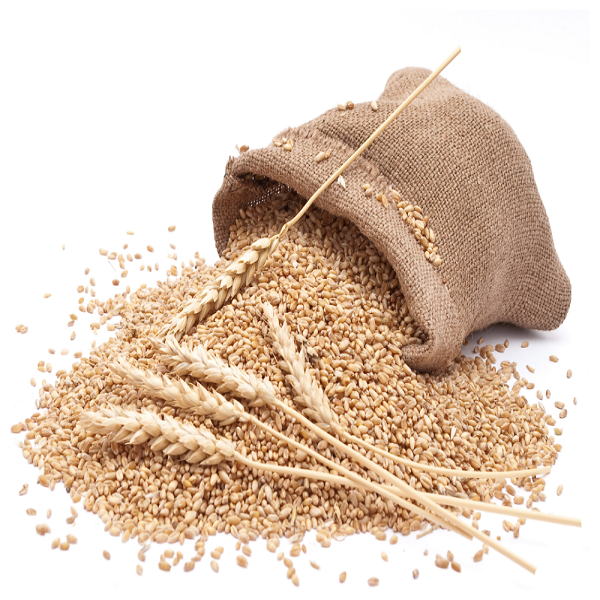
Soft Wheat
Specifications :
| Wheat Grade | II | III | Feed |
|---|---|---|---|
| Test Weight, g/L | ≥ 740 | ≥ 730 | Not regulated |
| Moisture, % | ≤ 14 | ≤ 14 | ≤ 14 |
| Gluten, % | ≥ 24 | ≥ 23 | Not regulated |
| Protein (on dry matter basis), % | ≥ 12 | ≥ 11 | Not regulated |
| Grain Impurities, % | ≤ 8 | ≤ 8 | ≤ 15 |
| In Particular: | |||
| broken grains | 5 | 5 | In limits for grain impurities |
| grains of cereals | 4 | 4 | |
| sprouted grains | 3 | 3 | |
| Waste Impurities, % | ≤ 2 | ≤ 2 | ≤ 5 |
Opis
Buy Soft Wheat Online
Soft Wheat, Wheat of Grade II and III to be used in food purpose (mainly for flour-milling and baking industry).
Feed wheat to be used in feed purposes and production of animal mixed fodder.
As per customer’s requirement other non-class-generating quality parameters can be analyzed in accordance with internationally recognized and approved methods.
Wheat: Varieties And Characteristics
The three principal types of wheat used in modern food production are Triticum vulgare (or aestivum), T. durum, and T. compactum. T. vulgare provides the bulk of the wheat used to produce flour for bread making and for cakes and biscuits (cookies). Soft Wheat can be grown under a wide range of climatic conditions and soils. Although the yield varies with climate and other factors, it is cultivated from the southernmost regions of America almost to the Arctic and at elevations from sea level to over 10,000 feet. T. durum, longer and narrower in shape than T. vulgare, is mainly ground into semolina (purified middlings) instead of flour. Durum semolina is generally the best type for the production of pasta foods. T. compactum is more suitable for confectionery and biscuits than for other purposes.
Related products
- Add to WishlistAdd to Wishlist
- Add to WishlistAdd to Wishlist
- Add to WishlistAdd to Wishlist
- Add to WishlistAdd to Wishlist
 Polski
  English